LINE Bank Thailand
Easy Loan for Small Business Merchants
What I did
As the lead designer, I led the end-to-end redesign of the loan application flow to make it simpler and more accessible for self-employed business owners with limited financial literacy, reducing application drop-off by 56%.
My role
Product Designer
Platform
Web app
Timeline
Skills
Stakeholder management
Wireframe, UX specification
User research & testing
Team
1 Project Manager
2 Product Designer
7 Engineers
About LINE Bank
LINE's digital banking platform
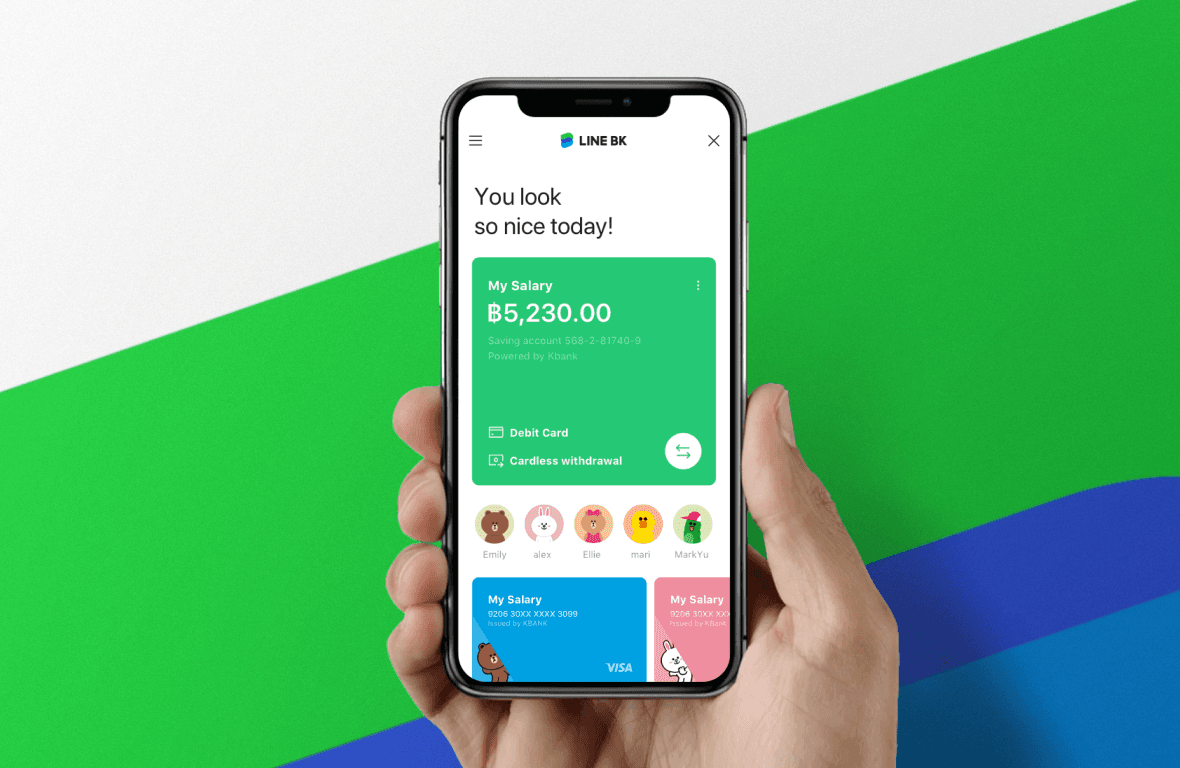
LINE is Asia’s leading social platform, best known for its messenger app with over 200 million users. Since 2020, it has expanded into digital banking with “LINE Bank,” now available in four countries.
In Thailand, where over 90% of the population uses LINE, LINE Bank is the country’s first digital bank. It connects directly with Kasikorn Bank, one of Thailand’s top financial institutions, offering a seamless banking experience through the LINE app.
Integrating banking into social platform to make everyday finances more seamless and accessible.
Context
High loan demand from small merchants
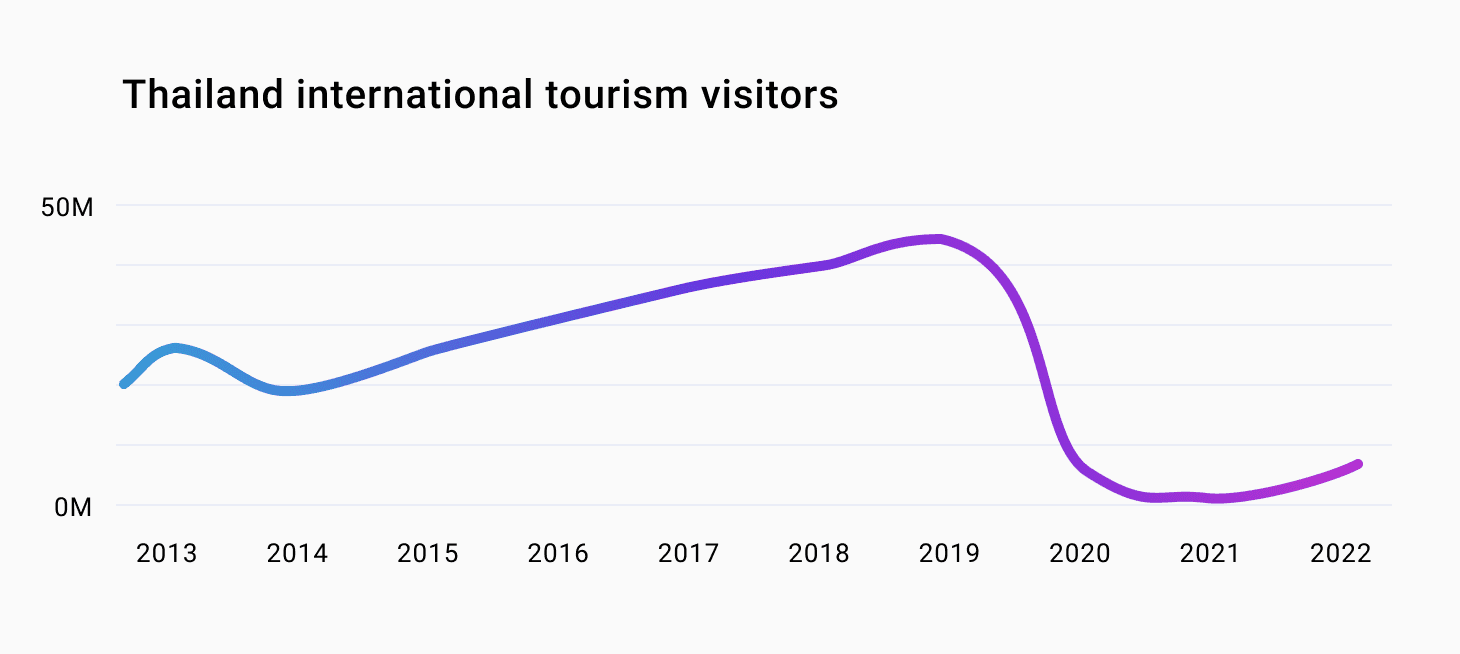
In Thailand, where tourism accounts for 12% of GDP, the COVID-19 pandemic hit the economy hard. Small business owners were among the most affected—tourism revenue dropped by nearly 100% year over year, and business closures increased by 20.4%.
Due to Covid 19, many small business owners ran out of money and sought loans to keep their businesses running.
Impact
56% decrease
After redesigning the offer amount page, we were able to significantly reduce the number of expired offers from 11% to 4.8%.
App-in Conversion rate
7% increase
By streamlining the address input process, we increased the average app-in conversion rate from 24.3% to 27%.
Target user

Small merchants
with cash flow issues and limited access to credit
Pain Points
They need loans to sustain or grow their business, but are often rejected because they don’t have enough credit history.
Many have previously abandoned loan applications because the process was complex and difficult to understand.
Needs
A loan product that uses real transaction data for approval and removes unnecessary complexity from the application process.
Problem
High drop-off during loan applications
Since LINE Bank already offered loan products, we started by reusing the existing application flow. However, the high drop-off rates revealed clear usability issues. To understand the cause, I mapped the full user journey using user feedback and page level drop-off data.
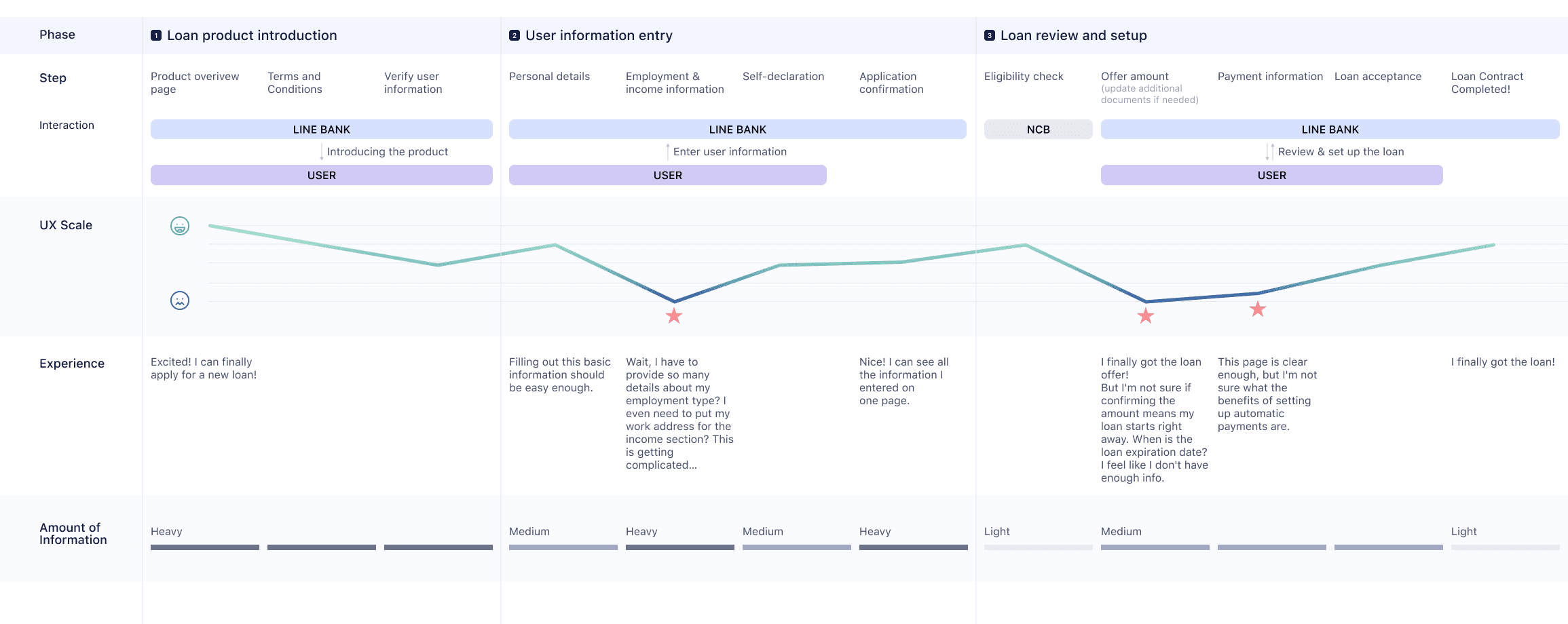
User Research
Focus group interview with 17 merchants.
To gain a deeper understanding, we conducted focus group interviews with 17 small merchants who had been offered credit but ultimately decided not to proceed.

Sarah Chen
Founder, Finflow
Sarah Chen
Founder, Finflow
Pain Points
Too many input fields
Users felt overwhelmed by how much information they had to fill out. This often led to mistakes, especially when entering their address.
Insufficient information at the offer stage
After seeing the loan offer, many users felt the screen didn’t explain enough. They were unsure what the offer meant and what to do next.
Unclear financial terms
Many Thai merchants were not familiar with installment loans or how interest rates work. They worried that interest might be charged on the full loan amount right away.
A loan product that uses real transaction data for approval and removes unnecessary complexity from the application process.
Design Direction
Based on these findings, I set a clear design direction for the project.
Pre-fill key information
Auto-fill user and payment info to reduce manual input and errors.
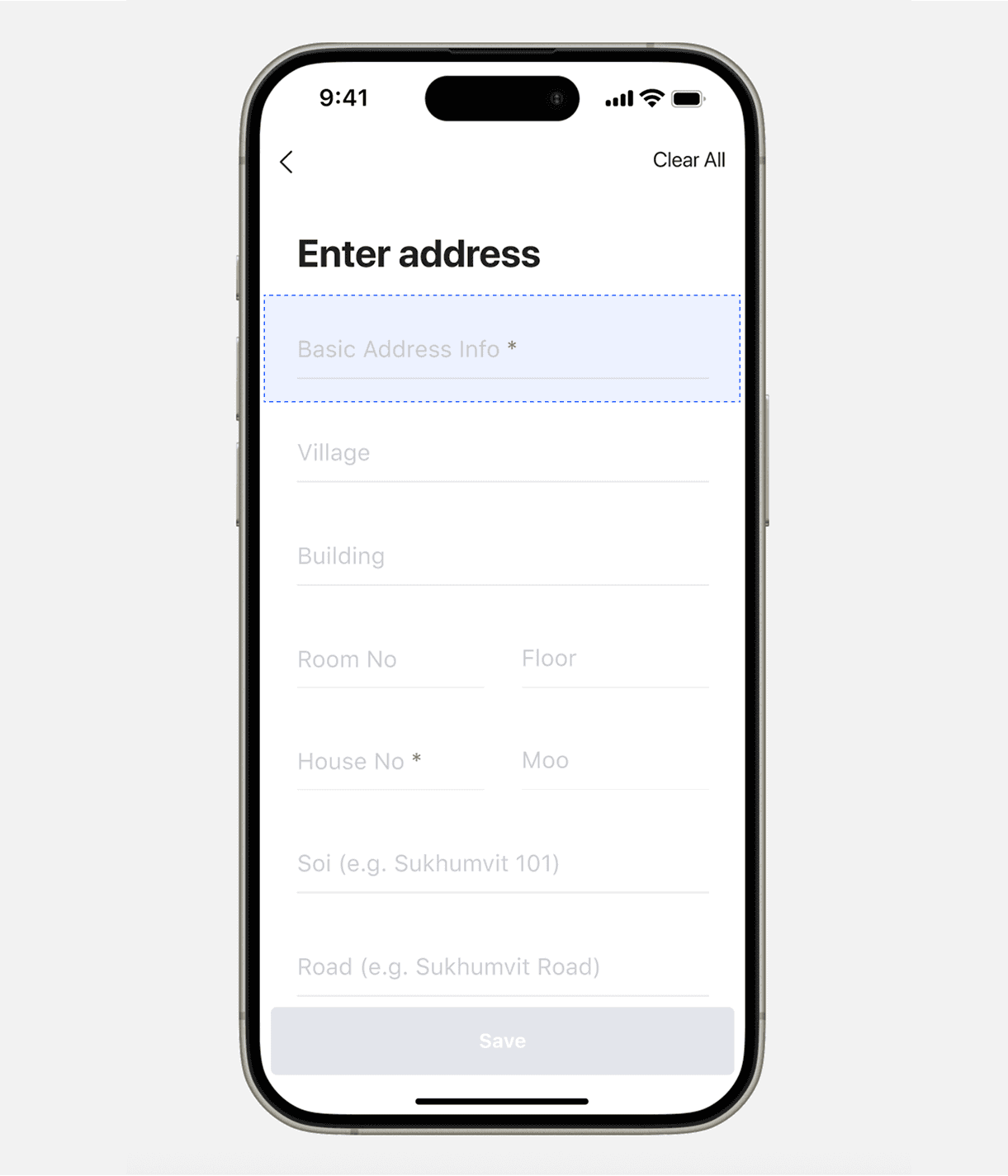
Streamline address input
Merge required address fields and simplify the overall address entry process.
Clarify financial terms
Clearly explain key loan details upfront to address user concerns before they make a decision.
Solution
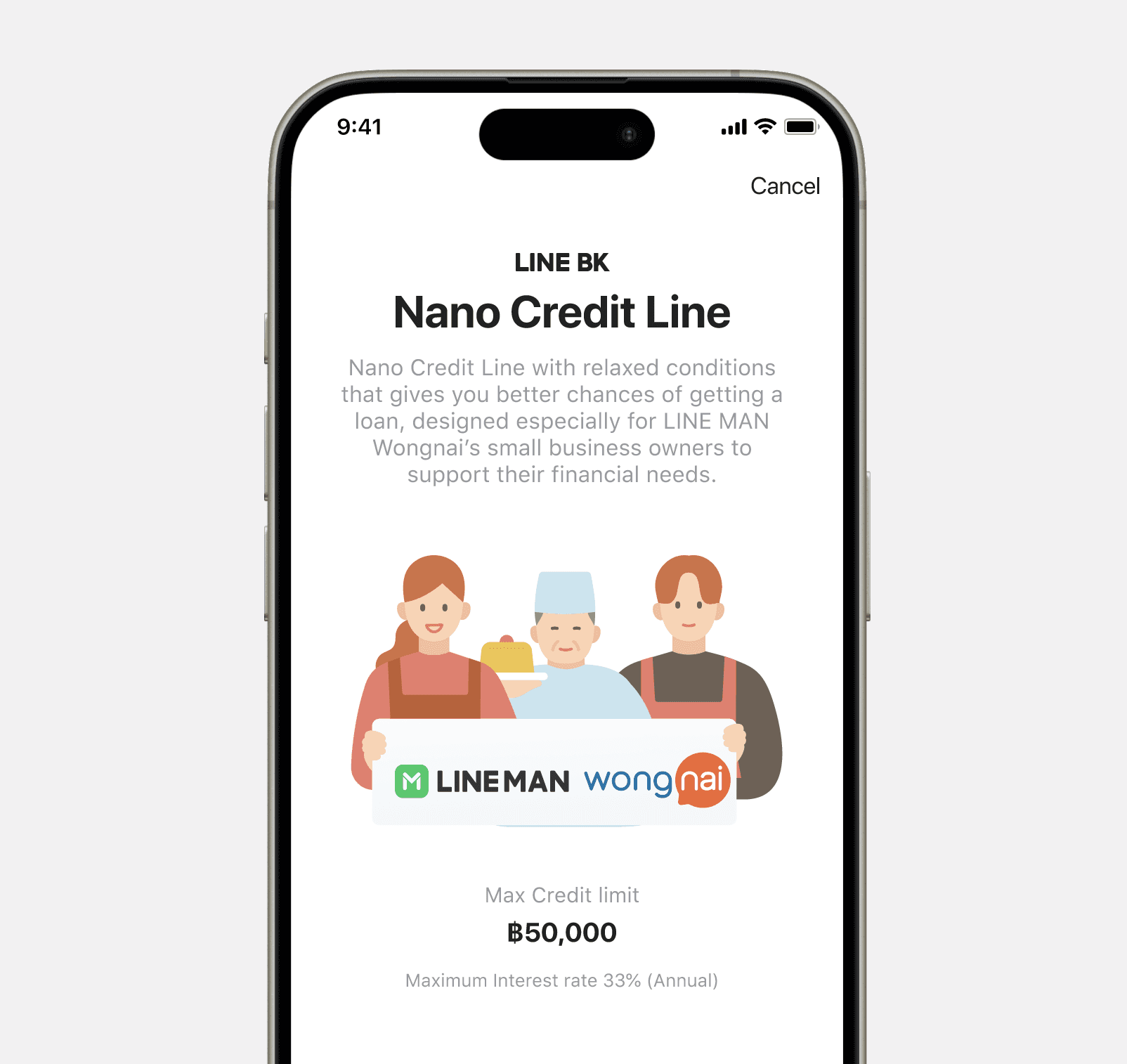
Loan introduction page tailored for small merchants
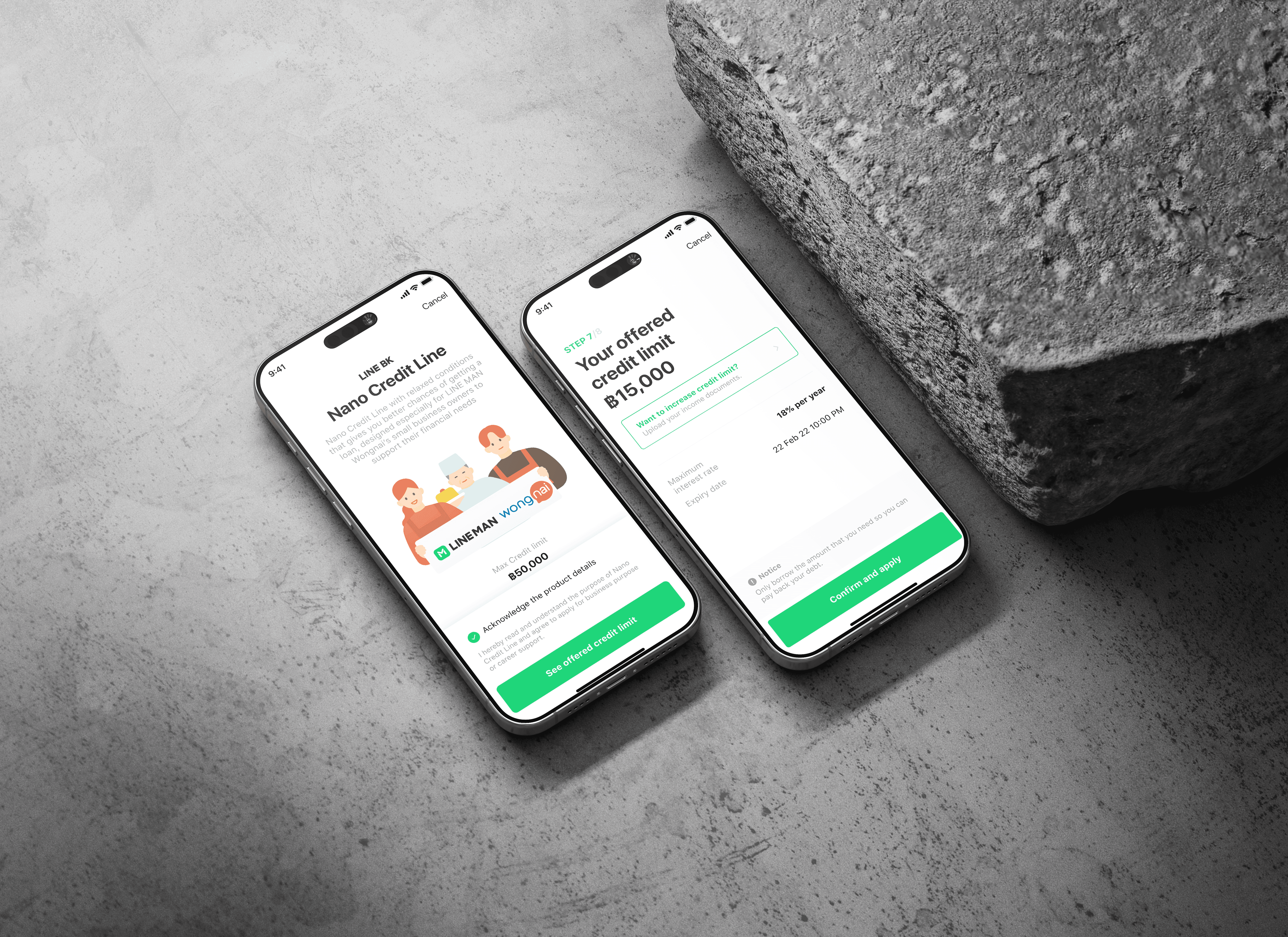
I introduced a clear and friendly entry page that explains the loan in simple terms, helping small merchants quickly understand what the product is and whether it’s right for them.
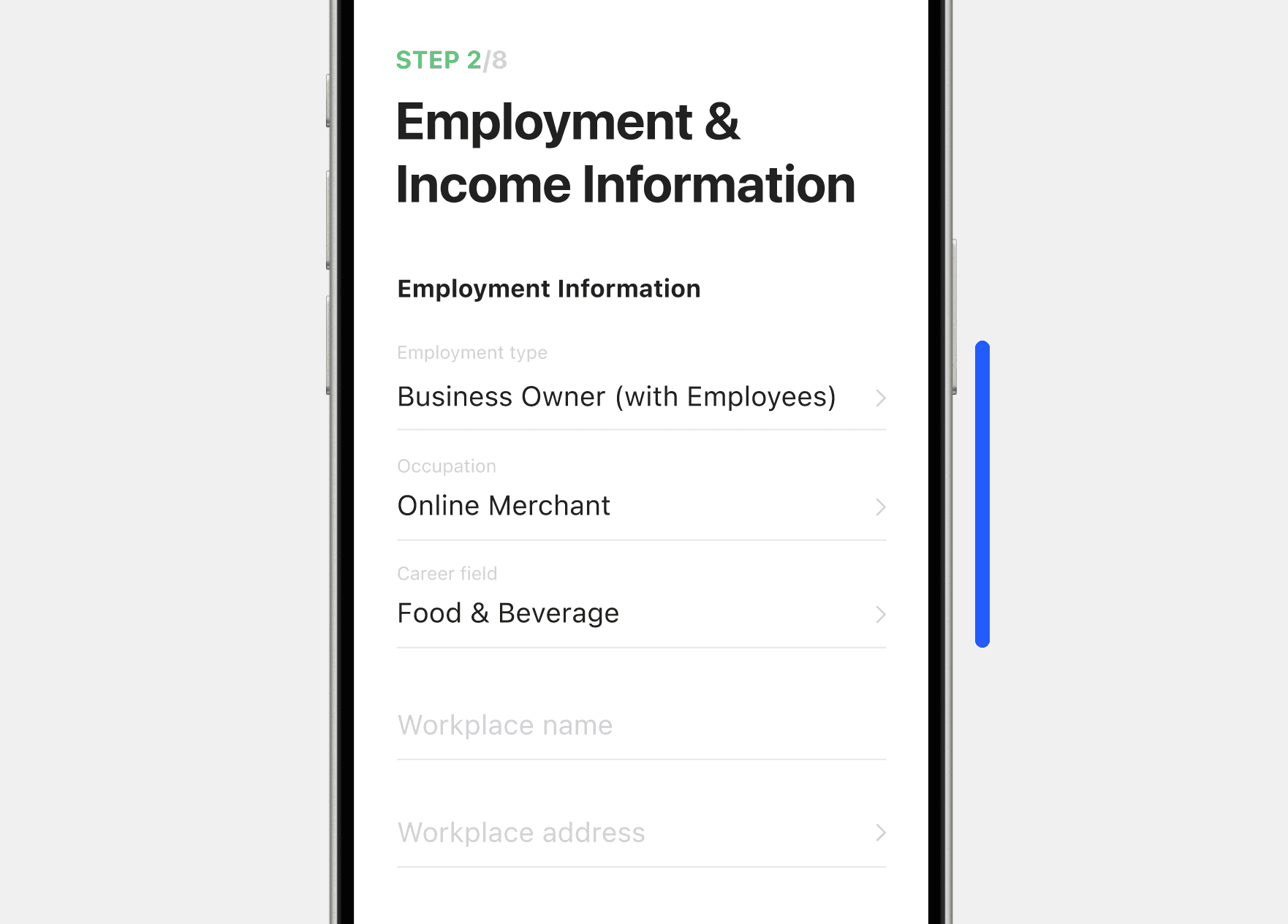
Pre-fill employment information
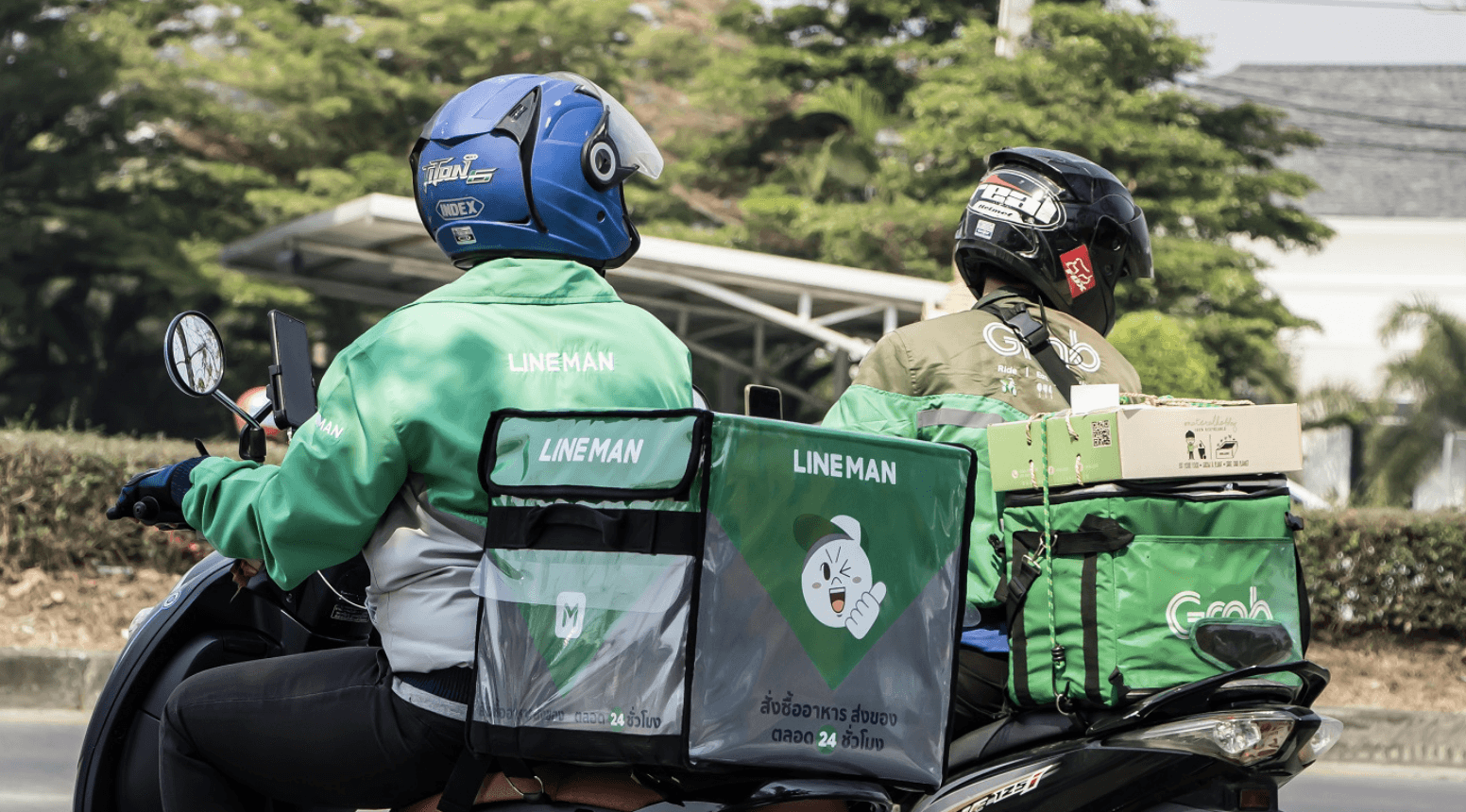
Since the loan was built in partnership with Thailand’s leading food delivery platform, most target users were F&B merchants. To reduce manual input, we pre-filled employment information wherever possible.
Streamline address input
Previous design
Users had to manually fill out too many address fields, which often led to input errors and loan rejections.
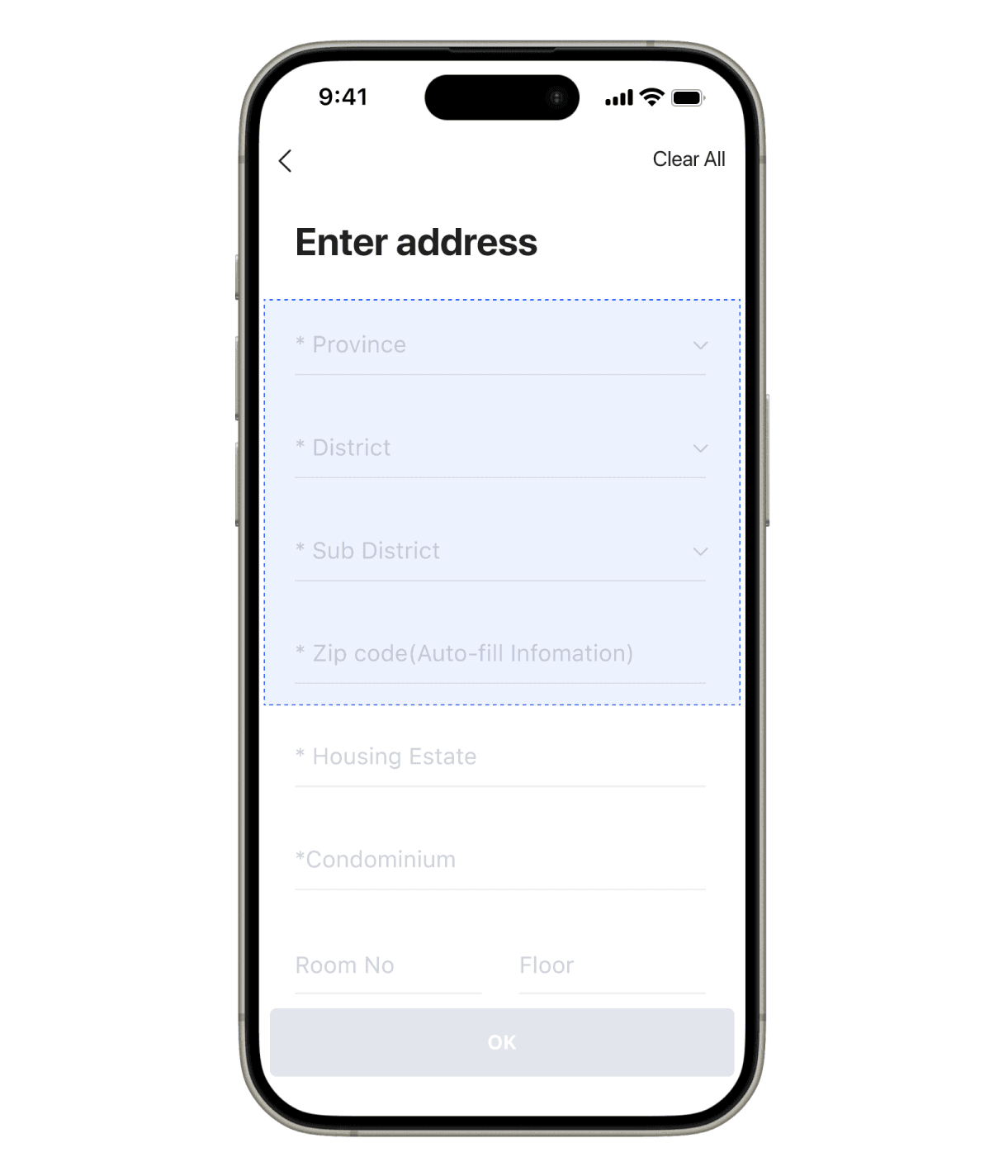
New design
I identified four commonly required address fields and merged them into a single, simplified input field.

Redesign credit offer page
Previous design
The credit offer lacked clear explanations, which made users unsure how the offer worked. As a result, many users hesitated and dropped out before accepting the offer.
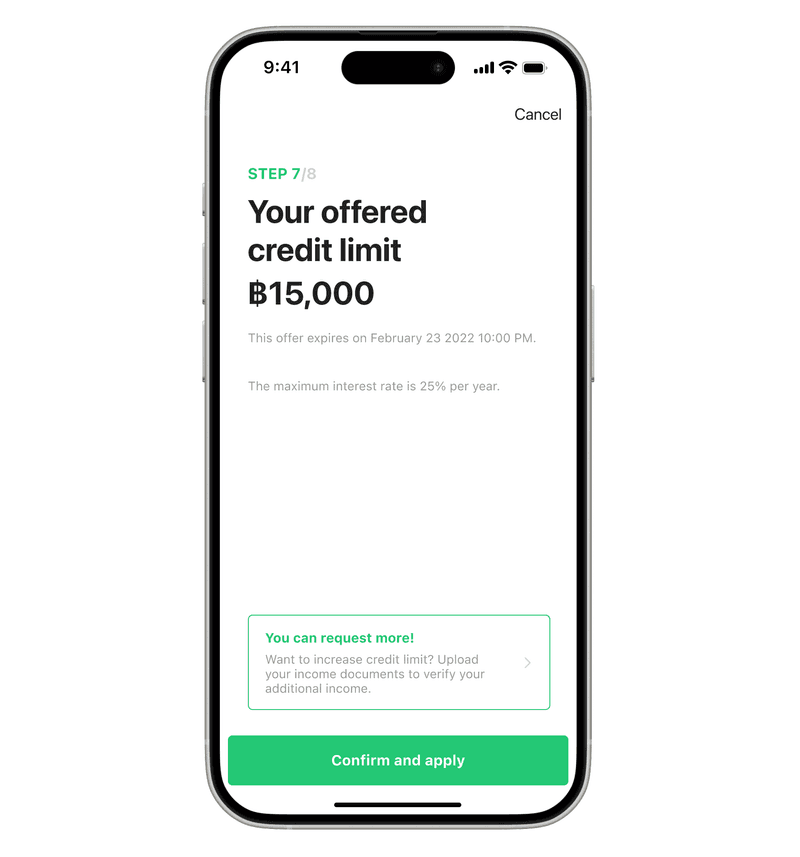
New design
I added a bottom popup to clearly explain key information before showing the full offer. I also reorganized the layout so important details were easier to see and understand.

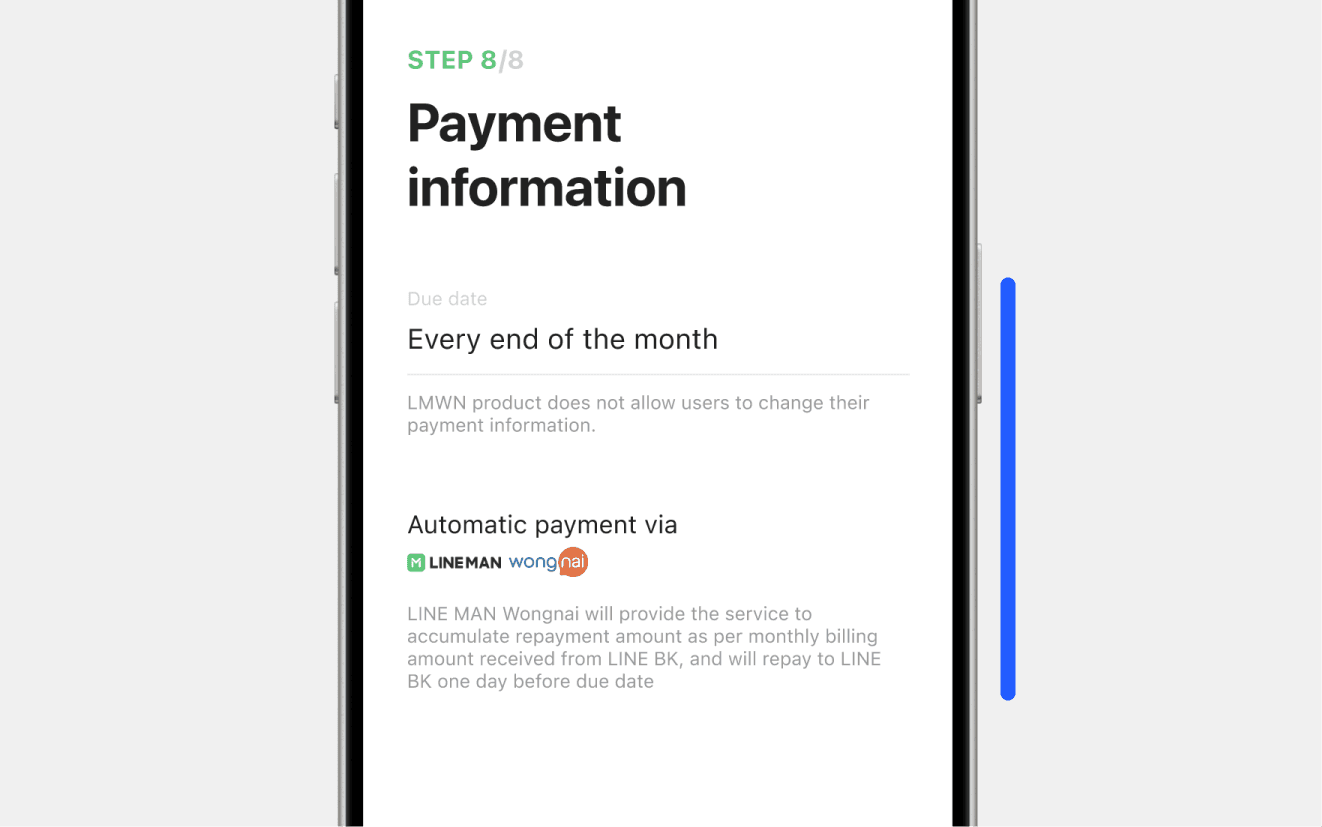
Pre-set payment information
To improve repayment rates for small merchants facing cash flow issues, the loan was offered only to verified users on LINE MAN Wongnai. Unlike other LINE Bank loan products, monthly repayments were automatically deducted through the LINE MAN Wongnai platform.
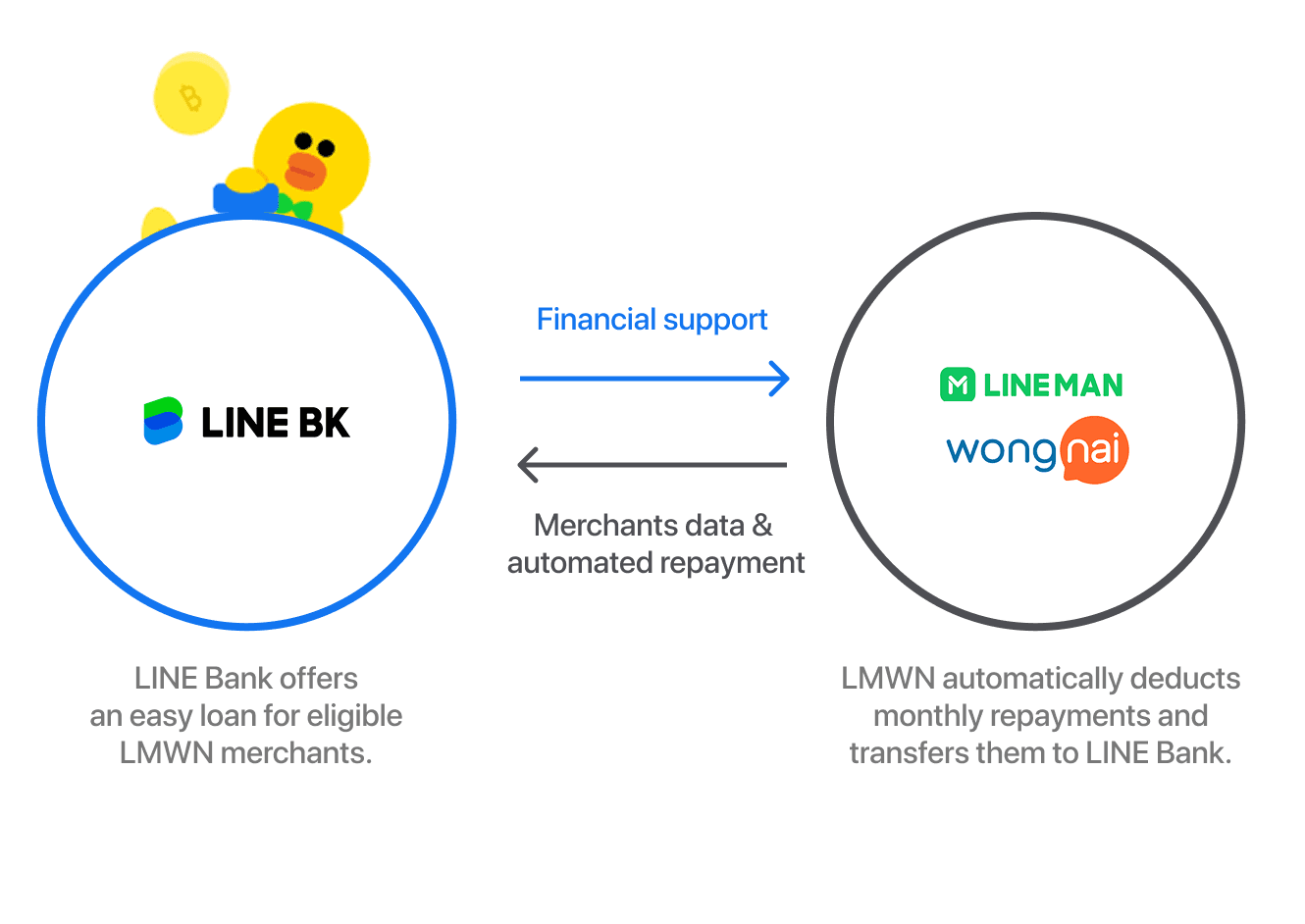
Based on this setup, I pre-set the payment information and clearly explained the repayment process so users knew exactly how and when payments would be made.
Service flow
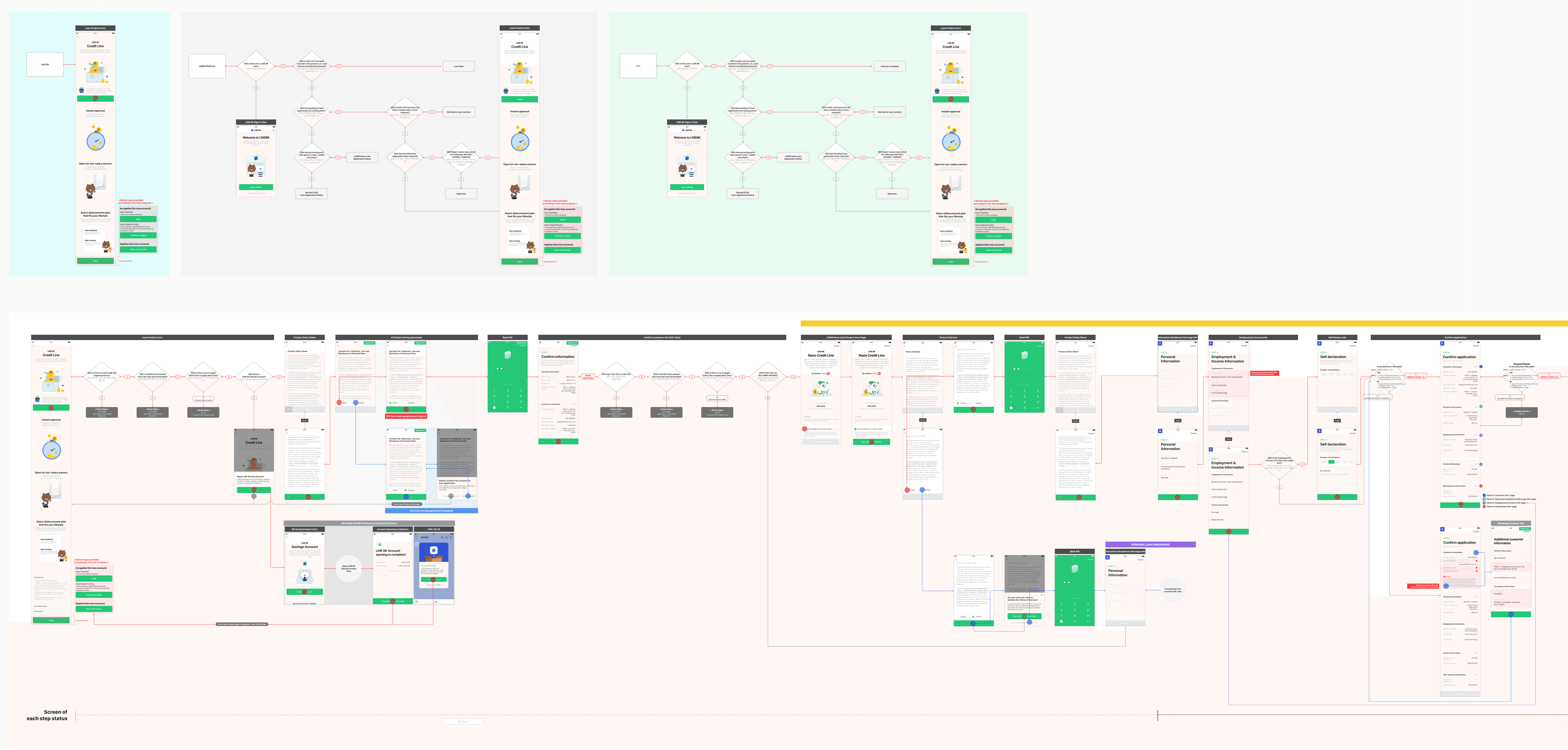
Full loan application flow
Building on these changes, I redesigned the end-to-end loan application flow and worked closely with cross-functional teams to ensure seamless execution.
When applying for a loan
I made the application easier by pre-filling information and reducing the number of steps required to complete the application.

After receiving a credit offer
I clearly explained the credit and payment details that users often struggled to understand.

Usability testing
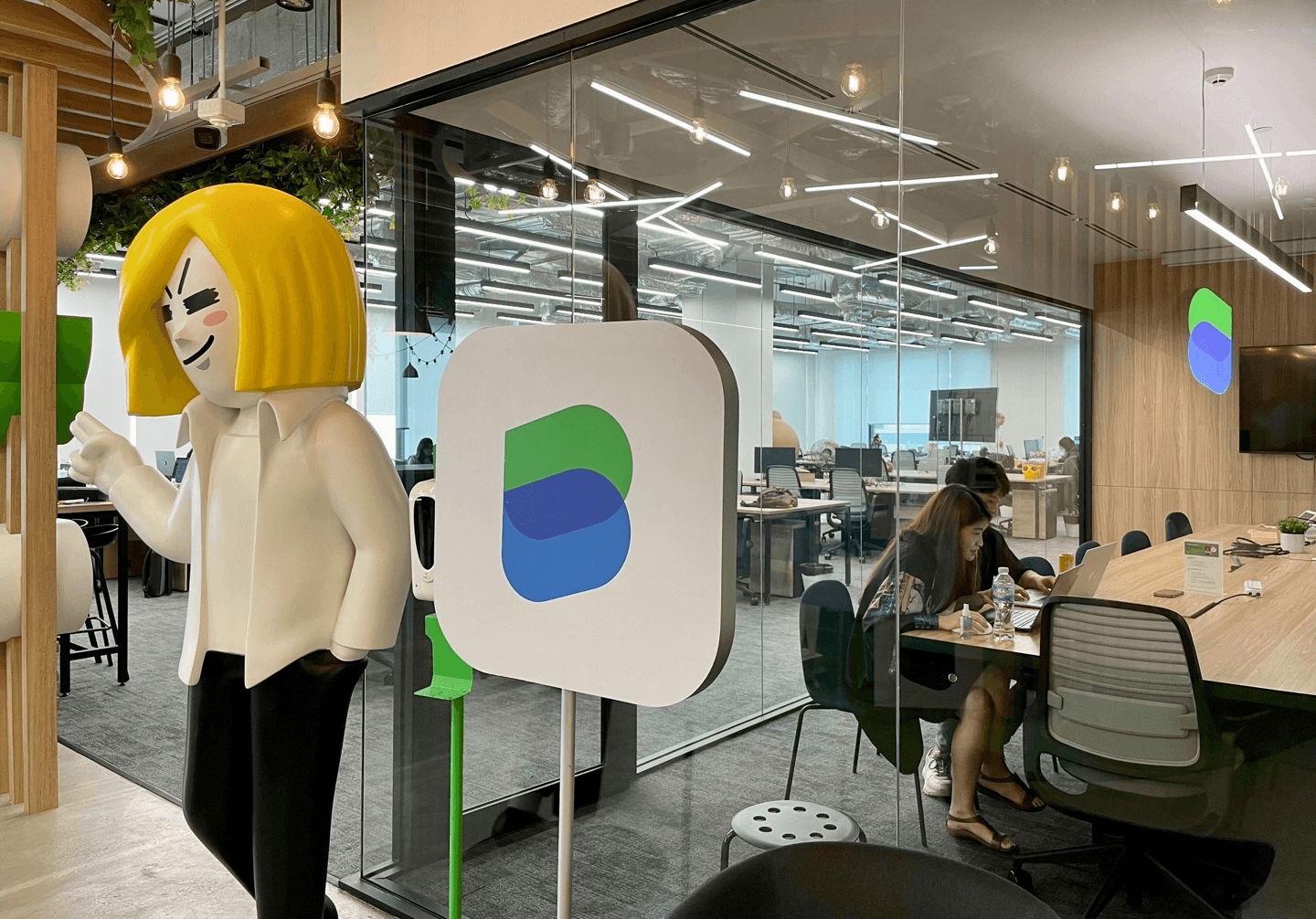
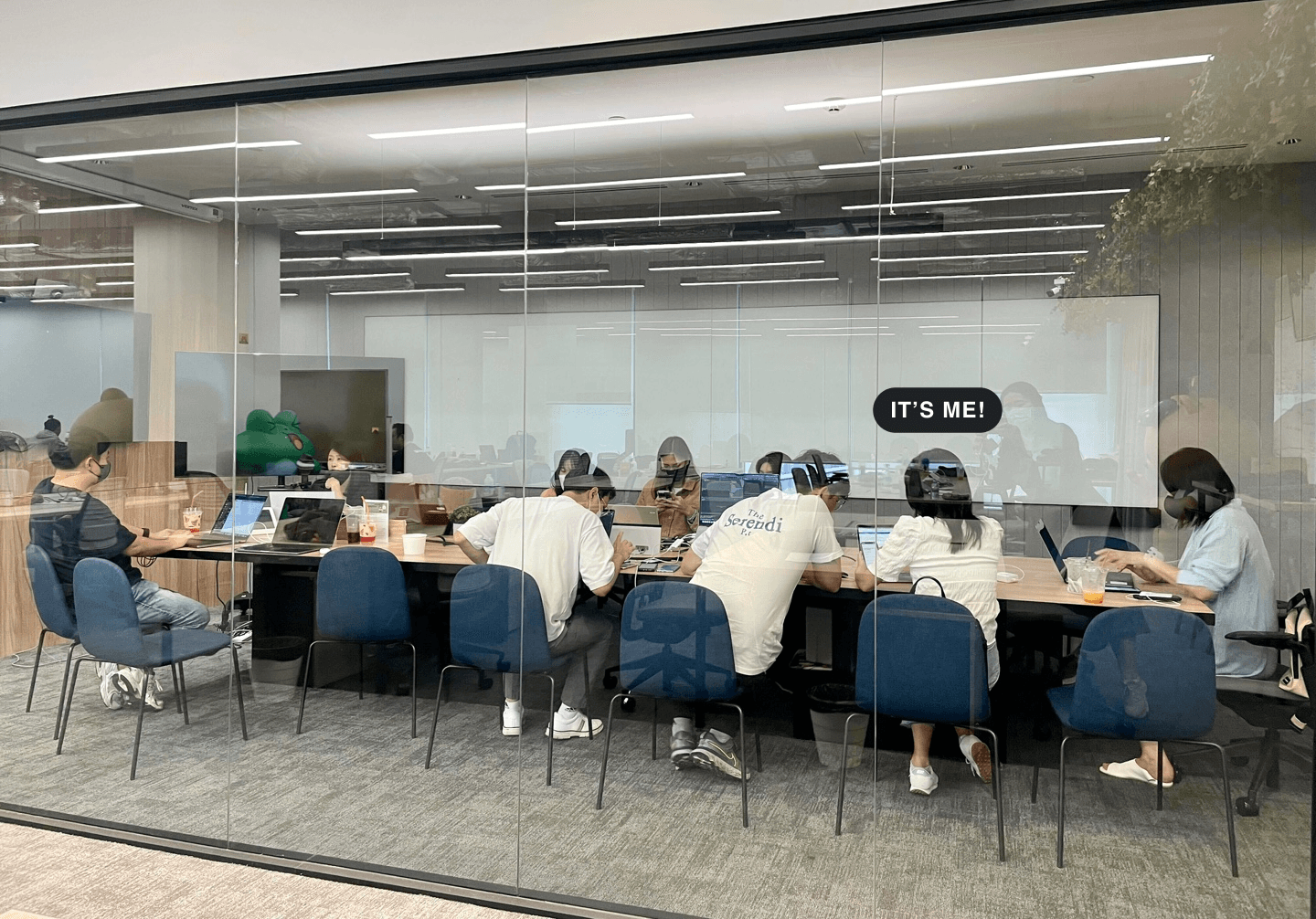
I facilitated a dogfooding session in Bangkok, Thailand, working closely with the local QA and engineering teams, reducing critical defects by 35%.
Takeaway
Designing financial products means making complexity feel manageable and trustworthy for every user.
SOYUN MOON
⋆⁺₊⋆ ☾⋆⁺₊⋆